






Business education has always played an important role in shaping future managers, entrepreneurs, analysts, and decision-makers. Classrooms introduce students to core concepts such as finance, marketing, operations, human resources, economics, and strategy.
These subjects create the academic foundation needed to understand how businesses function. At Sheila Raheja School of Business Management & Research (SRBS), this academic foundation is seen as the starting point of a student’s overall professional development.
However, in today’s highly competitive and dynamic environment, classroom learning alone is no longer enough. What truly prepares students for the real world is industry exposure. The gap between theory and practice is often wider than students expect. A student may perform well in exams, know business models, and present case studies confidently. Still, when it comes to practical situations, students may not be comfortable.
This is where industry exposure plays an important role. This helps students relate what they have learned to practical situations. It is not only an advantage, but a need for modern business education.
Understanding the Difference Between Classroom Learning and Industry Exposure
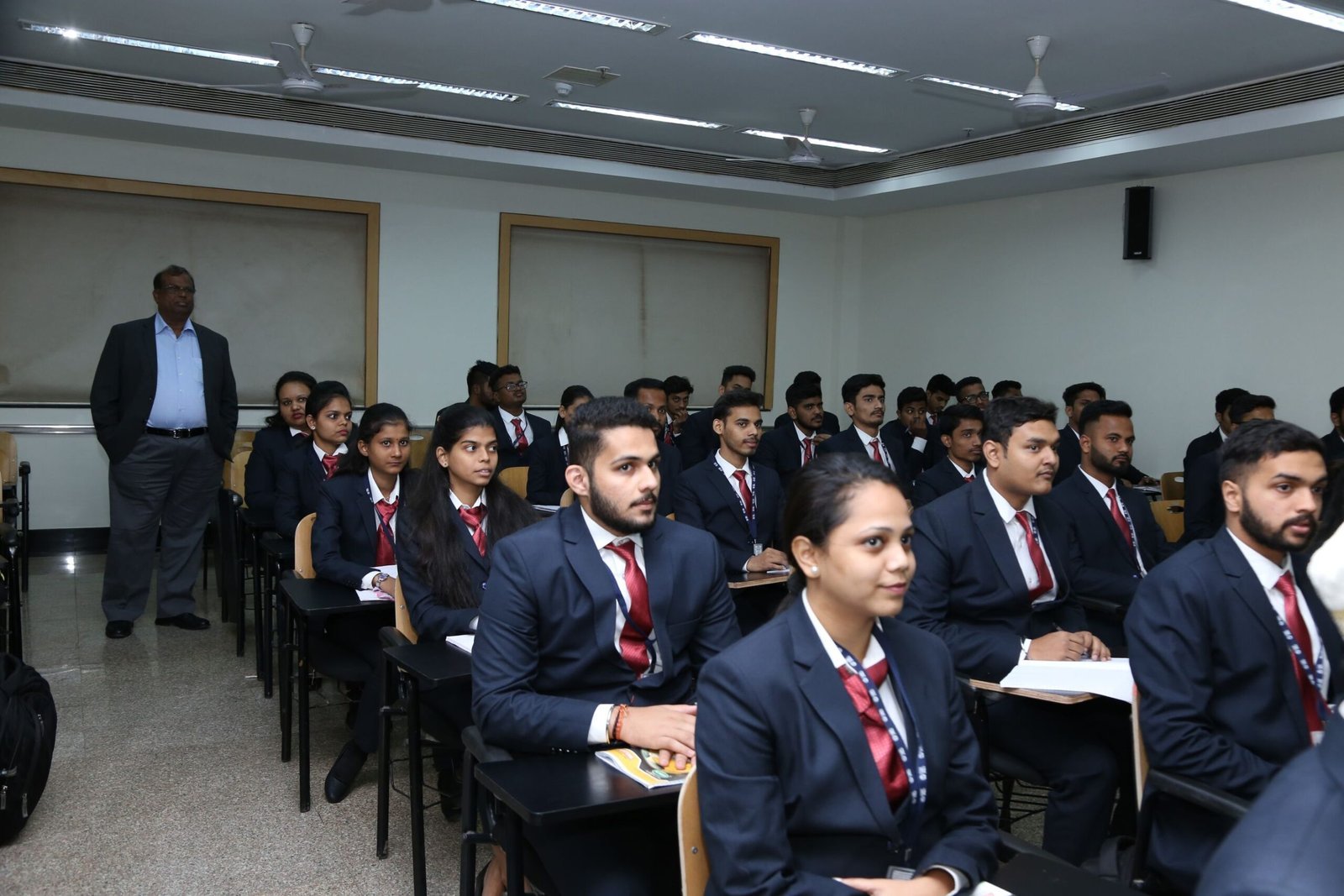
Classroom learning focuses on structured knowledge. Students learn principles, frameworks, definitions, and models that help them understand business systems. They study consumer behaviour, market segmentation, leadership theories, accounting rules, and management concepts. This academic environment is important because it builds a strong base.
Industry exposure, on the other hand, takes students beyond books and lectures. It introduces them to the realities of the corporate world, startup ecosystems, family businesses, manufacturing units, financial institutions, and service sectors.
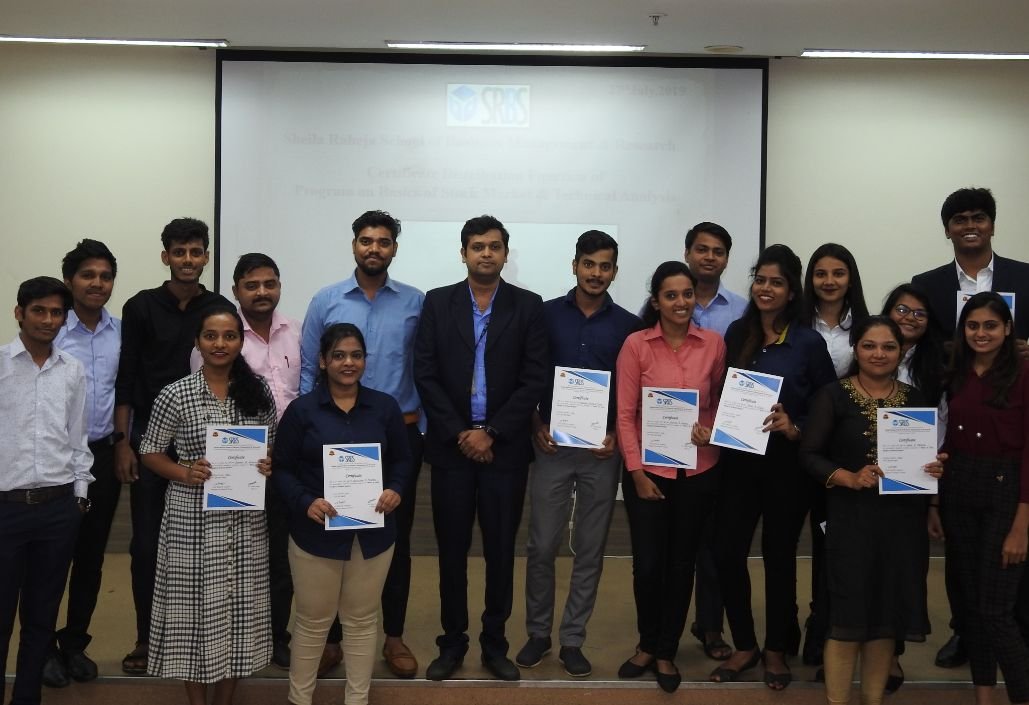
Through internships, industrial visits, study tours, live projects, guest lectures, mentoring sessions, fieldwork, and corporate interactions, students get to see how business decisions are actually made. Institutions such as Sheila Raheja School of Business Management & Research (SRBS) understand the importance of combining academic learning with such practical exposure.
In a classroom, a marketing strategy may look perfect on paper. In the real world, budget limitations, consumer unpredictability, team coordination, deadlines, and competition may completely change how that strategy is executed. That practical understanding only comes through industry exposure.
Why Practical Exposure Creates Better Business Professionals
One of the biggest reasons matters is that it develops practical thinking. In a workplace setting, problems do not usually manifest themselves in a clear and concise manner that can be answered by a textbook. There is a need for students to be able to analyse a situation, make a decision based on limited information available, and adapt to changing circumstances. Such an ability cannot be achieved through theory alone.
By being exposed to the industry, the students get a feel for the culture of the industry. The students get a feel for how people interact with one another in a professional setting. There is a need to get a feel for a person’s responsibility/accountability in a workplace setting. The students get a feel for how a business works and how the goals of the business trickle down to all aspects of the business.
For example, a student may learn about supply chain management. The student may have a good working knowledge of how inventory models work. However, visiting a warehouse or a manufacturing plant can give the student a better appreciation for the complexities involved.
Builds Career Readiness from the Start
Today’s employers are not just looking for good grades. They are also seeking individuals who can make a contribution right away. They are seeking individuals with good communication skills, problem-solving skills, teamwork skills, flexibility, and commercial awareness. Students with industry exposure often enter the job market with greater confidence because they already have some familiarity with professional environments.
Internships and live business projects allow students to apply what they have learned in class. They begin to understand how meetings are conducted, how reports are prepared, how client communication works, and how business goals are measured. This makes them more job-ready than students who have only studied theory.
In many cases, this also helps students discover what type of career suits them best. A student may enter business school thinking finance is the right path, but after mentorship by the teachers, and an internship in digital marketing or operations, they may realise their strengths lie elsewhere. Early exposure reduces confusion and helps students make smarter career decisions. At Sheila Raheja School of Business Management & Research (SRBS), such exposure can play a valuable role in helping students shape their future career path.
Strengthens Decision-Making and Problem-Solving Skills
Business environments are constantly changing. Consumer preferences shift, technology evolves, market conditions fluctuate, and competition becomes more intense. Students must learn how to think strategically and solve real business problems. It plays a major role in developing these abilities.
When students work on live assignments or interact with professionals, they see how decisions are made under pressure. They understand that there is not always one perfect answer. Sometimes a company chooses a less ideal option because of time limits, cost concerns, or market realities. This kind of perspective management in learning is far more valuable than memorising concepts for examinations.
Through industry exposure, students develop the ability to connect theory with action. They begin to pose better questions, think about the constraints, and adopt a business mind. This helps them improve their analytical skills for future leadership roles.
Improves Communication and Professional Confidence
Some students may be academically talented but lack confidence in speaking up in meetings or presenting ideas in front of professionals. Industry exposure helps them overcome this gap. Regular interaction with industry experts, mentors, and managers improves professional behaviour and communication style.
Students learn how to write emails, prepare presentations, participate in discussions, and express ideas more clearly. They also become more comfortable with feedback, deadlines, and structured reporting. These are small but powerful aspects of professional growth of the students of business management.
Confidence does not come only from knowing concepts. It comes from applying them, making mistakes, learning from them, and improving. That is exactly what industry exposure offers. Over time, students become more polished, self-aware, and prepared to represent themselves in interviews and workplaces.
Helps Students Understand Current Market Trends
Textbooks are important, but they often cannot keep pace with rapid changes in the business world. New technologies, changing consumer behaviour, digital transformation, artificial intelligence, sustainability, startup culture, and global market shifts are influencing how companies operate. Industry exposure keeps students connected to these realities.
When students attend seminars, corporate talks, panel discussions, and industrial visits, they gain insights into what businesses are focusing on today. They hear directly from professionals about market trends, hiring expectations, business challenges, and growth areas. This makes their learning more relevant and current.
A strong business education should not remain limited to past case studies alone. It should also prepare students for present and future business environments. Industry exposure ensures that students stay updated and better aligned with market demands.
This is especially relevant in institutions like Sheila Raheja School of Business Management & Research (SRBS), where business education can become more meaningful when connected with real industry developments.
Bridges the Gap Between Education and Employability
One of the most discussed concerns in higher education is employability. It is a sad truth that many graduates pass out of their courses but fail to meet the demands of the industry. The reason for this is that they have knowledge but lack experience. Industry exposure is one of the most effective ways to bridge this gap for students.
Students who get exposure to the industry during their course tend to perform better in placements. They understand recruiter expectations, can speak about practical experiences in interviews, and present themselves as more capable professionals. Even a short internship or a project with an organisation can add great value to a student’s profile.
From the employer’s perspective, such students appear more trainable, mature, and work-ready. This is why institutions that integrate industry exposure into their programs often produce stronger placement outcomes.
Encourages Entrepreneurship and Innovation
Not every business student wants a corporate job. Many aspire to build startups, manage family businesses, or create independent ventures. For such students, industry exposure is even more important. It helps them understand market needs, customer pain points, pricing realities, competition, and operational challenges.
By observing businesses closely, students gain clarity on what works and what does not. They learn from real examples instead of assumptions. This practical insight is extremely valuable for anyone who wants to innovate or start something of their own.
Entrepreneurship requires more than ideas. It requires execution, resilience, market understanding, and decision-making ability. Industry exposure helps students develop exactly these qualities.
The Ideal Business Education Model
The best model of business education is one that balances academic education with industry interaction. While concepts are clearly understood in the classroom, relevance, application, and confidence are provided in industry interaction. Both are not possible without each other, and if students are expected to be ready for a business career in a real sense, then industry interaction must be given utmost importance.
If business schools are providing internships, case competitions, industry visits, live consulting experiences, expert talks, and corporate mentorships, then they are providing a better model of business education. They are going beyond teaching students; they are mentoring and preparing students for a world that is awaiting them.
Conclusion
Although learning in the classroom is an essential part of business learning, it is not sufficient alone. In a world where employers are looking for skills, adaptability, and practical experience, industry learning is now more important than ever. Industry learning helps to turn students into active professionals instead of passive learners. It sharpens their thinking, improves confidence, enhances employability, and prepares them for real business challenges.
The true purpose of education is not only to help students pass exams, but to help them succeed in life and career. That is why industry exposure matters more than just classroom learning in business education. It is the bridge between knowing and doing, between studying and succeeding, and between ambition and achievement.