





In the competitive, fast-evolving business environment prevalent today, Business
management education cannot afford to stick solely to classroom teaching or textbook
knowledge. Employers today want industry-ready graduates who are conceptually clear,
analytically astute, and have exposure to the real world.
This is where the importance of a balance between theoretical and practical learning in
management comes in.
Contemporary management education in businesses emphasises bridging the gap
between academia and application. Those organisations that are successful in bridging
this academic-applied gap are capable of producing students not only proficient enough
to clear examinations, but also to tackle businesses with full confidence.
This integrated approach is the foundation upon which efficient management education
is imparted at Sheila Raheja School of Business Management & Research, where
there is strong synergy between academic education and practical exposure.
The Importance of Balancing Theory and Practice
Enables students to have structured thoughts, basic concepts, and analytical
frameworks. Disciplines like management principles, economics, accounting, marketing,
organisational behaviour, etc., give students a knowledge of the ways of running
businesses.
However, it is important to note that theory selection alone may not assure success,
because students need to:
- Apply concepts to real business situations
- Understand Workplace Dynamics
- Develop decision-making confidence
- Learn from real outcomes and feedback
By combining both approaches, students gain a deeper understanding of Business
management education in Mumbai management and develop skills that are relevant to
management careers today.
Strong Theoretical Foundation Through Structured Curriculum
A robust academic framework forms the backbone of management education. The
curriculum is so designed at SRBS that it builds up conceptual clarity across key areas
of business management. Classroom learning focuses on:
They are as follows:
- Core management principles
- Business economics and finance
- Marketing and human resources management
- Business law and corporate governance
- Strategic management concepts
The theoretical foundation helps the students analyse things logically, understand
organisational structures, etc. The faculty makes sure that, apart from memorising,
students are aware of the practical implications of these ideas in modern-day
businesses.
Case-Based Learning for Real-World Understanding
Among the most effective approaches for linking theory and practice is through the use
of case-based learning. Case studies introduce students to real-life business problems
faced by various industries.
Through case discussions, students can learn to:
- Analyse complex business situations
- Evaluate different views
- Apply Theoretical Models to Real-World Scenarios
- Development of Problem-Solving and Decision-Making Skills This also aids in fostering critical thinking skills while allowing them to grasp how management impacts business results.
Practical Exposure through Projects and Assignments
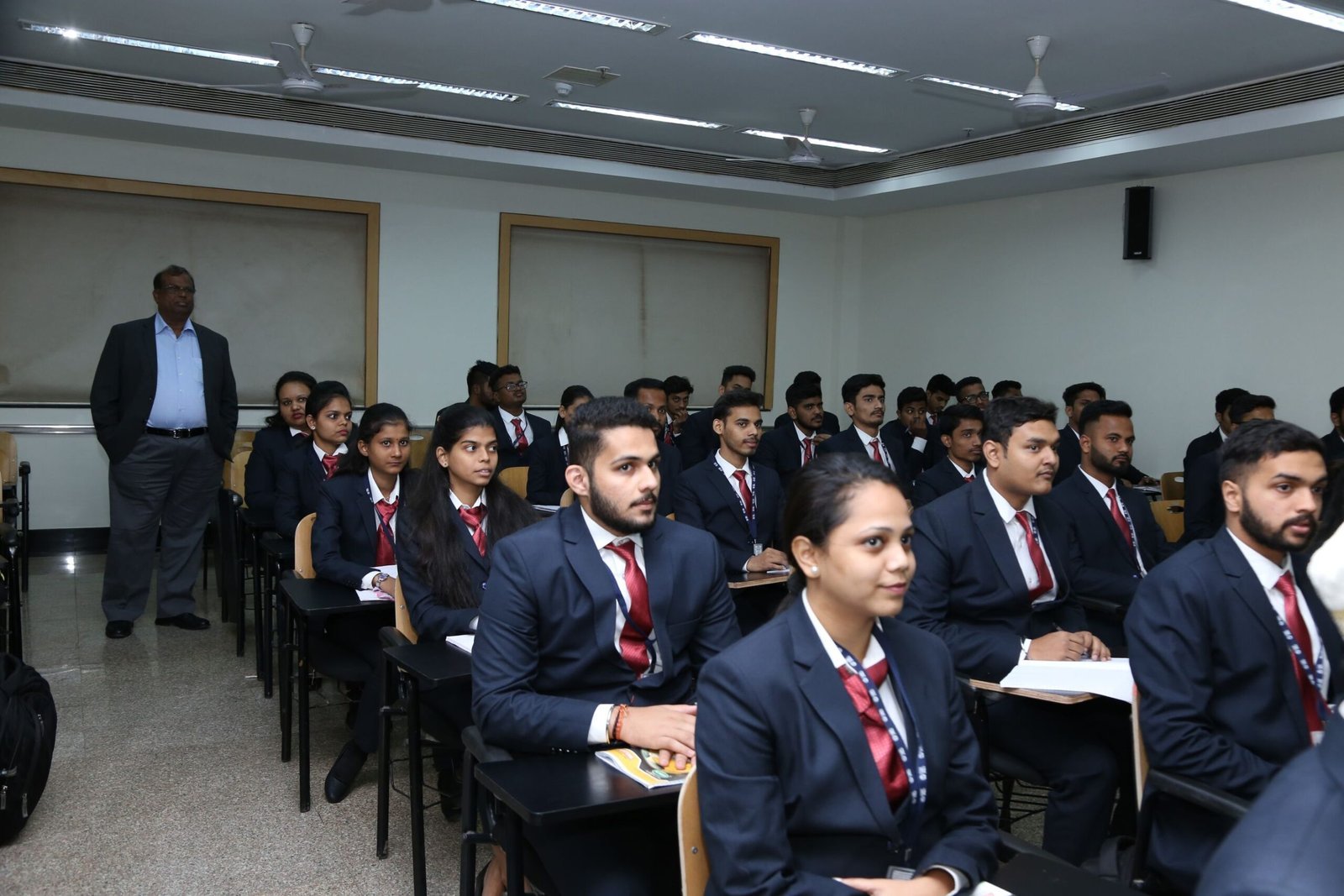
At SRBS, not only are students encouraged to participate in classroom discussions, but
they are also involved in various learning activities in terms of individual and group
projects designed to simulate real business scenarios. These projects help students:
- Conduct market research
- Analyse data and prepare reports
- Work collaboratively in teams
- Presenting results professionally
It fills the gap between academics and applications, which is a very important aspect in
terms of professional responsibilities.
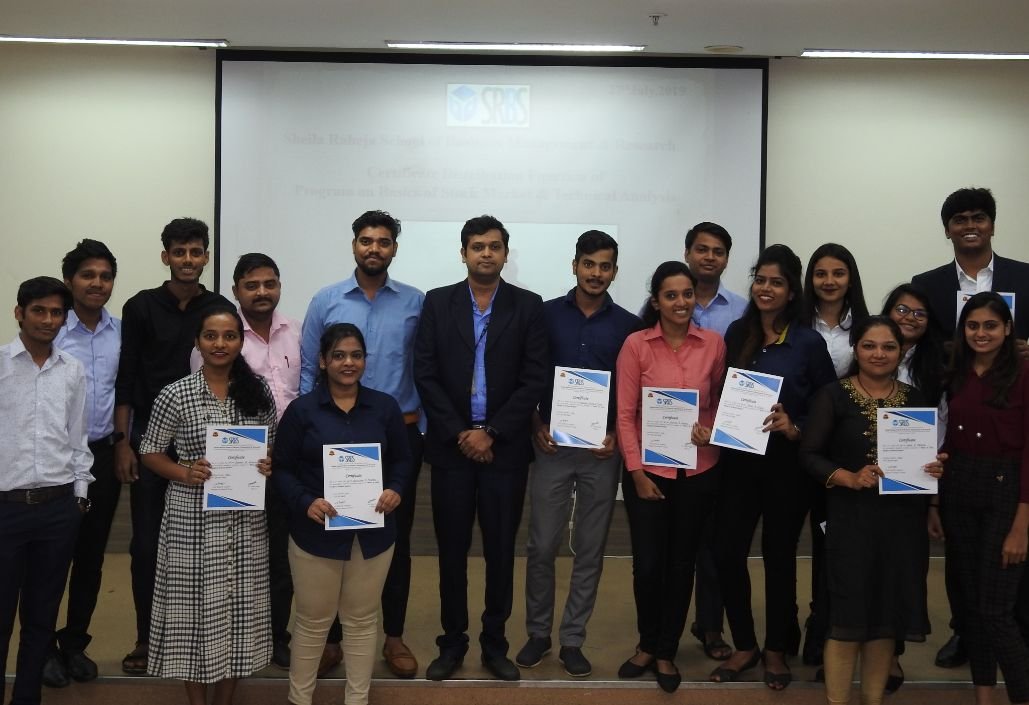
Industry Interaction and Guest Lectures
Interaction with industry professionals is essential for practical learning in management,.
Guest lectures, expert talks, and sessions help students learn about the business
outlook..
These interactions help students because they give them a chance to talk to each other.
- Understand current industry trends
- Learn from professional knowledges
- Gain insights into career expectations
- Connect academic concepts with workplace realities Industry interaction also encourages students to synchronise their learning with industry benchmarks.
Skill Development by Presentations and Communication
Business management education in Mumbai as a profession demands high
communication and presentation skills. SRBS has included these skills in its learning
framework through:
- Classroom presentations
- Group discussions
- Seminars and academic events
Students are able to express their ideas and opinions effectively, and to speak
confidently, which is a crucial requirement in management positions.
Internships and Practical Training
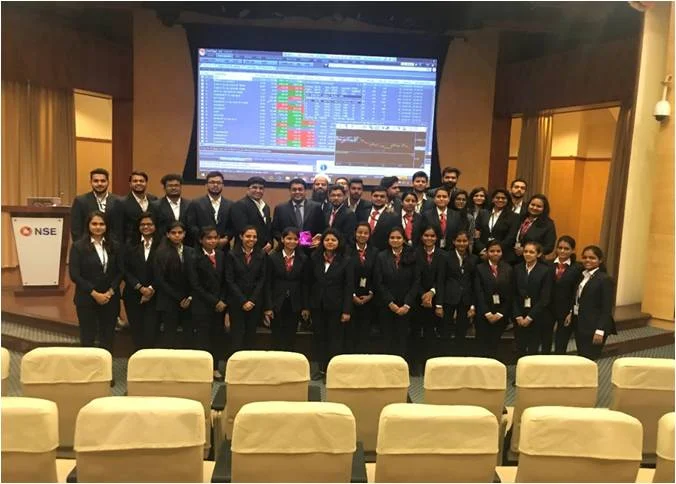
Internships are an essential component of practical training in management education.
They give students direct exposure to working environments and organisational
processes.
Through internships, students acquire:
- Practical experience in the industry
- Knowledge about the culture of the workplace
- Familiarity with the operations of the business
- Insight into career paths and interests
Internships assist students in applying their theoretical knowledge to practical situations
and learning where they need to develop their skills.
Faculty Guidance and Mentorship
Academic mentoring is essential for an effective combination of theory and practice.
The role of academic staff at SRBS is crucial in guiding and teaching students, as well
as helping them apply concepts in practice.
Mentoring helps students in:
- Academic planning
- Execution of projects
- Preparation for a career
- Enhancement of skills
This customised advice allows students to make the most of both theoretical and
practical exposure.
Use of Modern Teaching Tools and Resources
Modern management education is also based on technology-enabled learning. Online
resources, presentations, research tools, and analytical tools are used for theoretical
learning and practical application.
Students are introduced to:
- Research techniques in business
- Data performance techniques
- Digital presentation methods
This exposure to technology further enhances their preparedness for the real-world
business environment
Preparing Students for Real-World Business Challenges
By combining academic theory with practical learning, SRBS equips students to face
practical business challenges. Students acquire:
- Sound conceptual understanding
- Practical problem-solving skills
- Practical communication skills
- Moral and responsible decision-making
This comprehensive method of education improves job prospects and readies students
for sustained development in business management.
Conclusion
The integration of theory and practical learning is a must for effective business
management education. An academic method alone is not sufficient for readiness, and
a method that is only practical with no concepts is shallow.
SRBS, through a combination of theoretical learning and practical learning, provides a
well-rounded learning environment that prepares students for professional success.
This approach ensures that students graduate not only with visionary knowledge but
also with the confidence, skills, and adaptability required to thrive in today’s dynamic
business landscape.