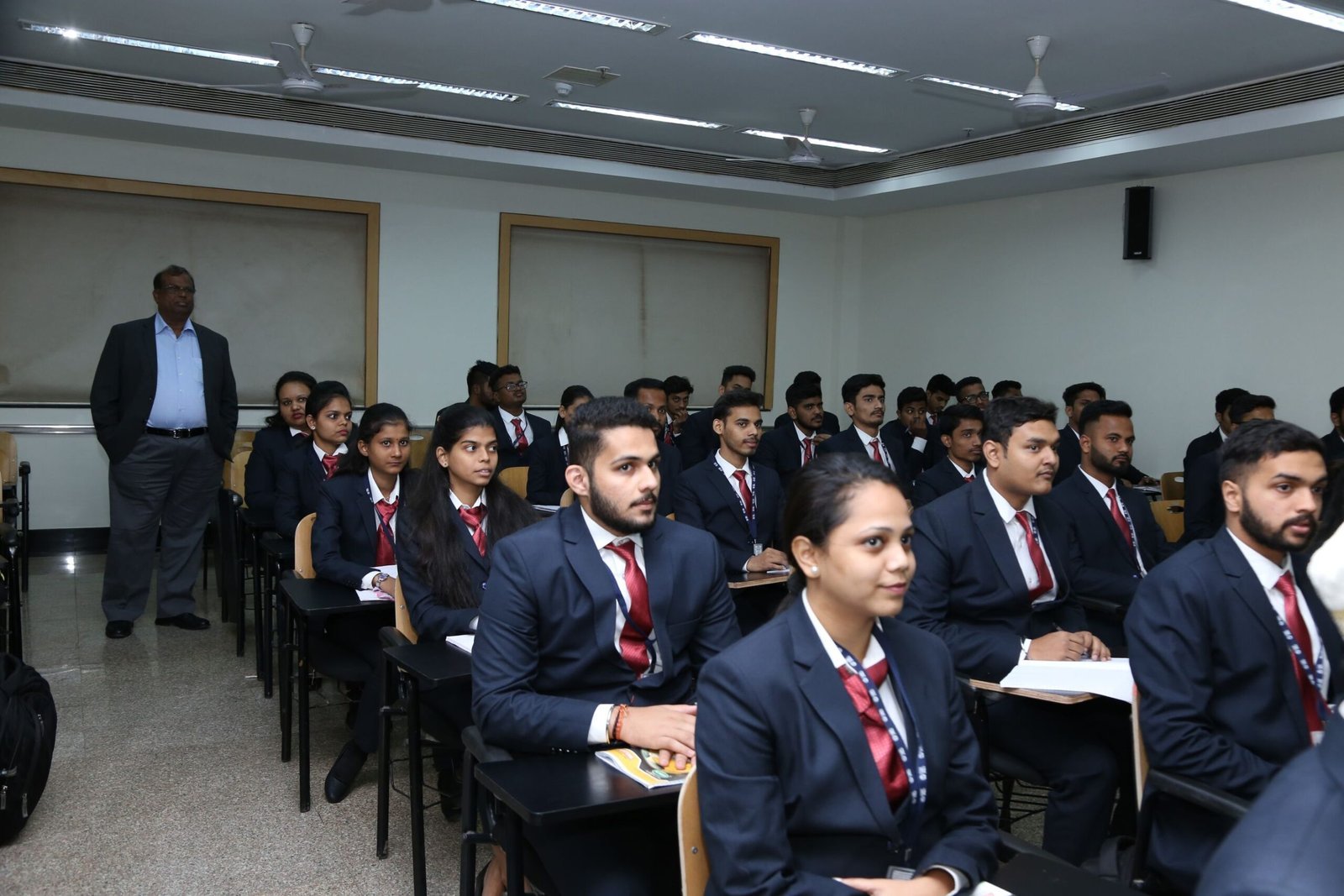





Enter any campus recruitment process, and you can bet on seeing a similar picture. Lines of well-turned-out candidates with their professionally written resumes and a silent hope that their academic success will speak for itself. It often doesn’t.
Today’s recruiters consider prospective employees in a way very different from what it used to be ten years ago. While a good university education helps land an interview, it won’t help clinch the deal for a candidate anymore.
The criteria that really matter in the eyes of hiring officers hide somewhere between pages of academic transcripts in the way candidates think, communicate, and cope with the rough-and-tumble of reality.
What Recruiters Actually Look For in Business Management Graduates
One myth needs shattering here: that all recruiters look for toppers. Not all do. In fact, the very first observation from my interaction with several hiring managers in India is that most companies prefer recruits who can immediately become a resource for them.
That usefulness shows up in a few concrete ways. A fresher who understands how a profit-and-loss statement connects to a marketing budget is more valuable than one who memorised the definitions but never linked them. Recruiters notice when a candidate asks a sharp question during an interview.
They notice the opposite, too—the blank stare when a panel asks how a graduate would handle an angry client or a missed deadline.
In the subject of Business Management, there is always value placed on individuals who can juggle both: technical knowledge in the areas of finance, operations, or HR, and the ability to use it when put under pressure. The new graduate may be full of the former, but lacks the latter. It is reducing this gap early on that sets candidates apart.
Skills That Get Noticed (Beyond the Grade Sheet)
Communication tops that list and has been doing so since forever. Not the professional communication that you have seen in textbooks and in college. The real-life communication, such as explaining a thought in an email, arguing with a boss without losing your respect, condensing a large report into three lines that an executive can use. Many students do not realise how vital writing and communication skills are in the very first job.
And then there is the issue of taking ownership. While employers may call it different things like responsibility, initiative or gravity about the work, they refer to one and the same thing here.
Such a graduate will follow through without needing to be asked to do so, will identify a potential problem and act on it without having to be prompted. And this is one trait which cannot be faked in an interview.
A few other things recruiters quietly value:
Comfort with data. Fluency with Excel, dashboards, and analysis is expected at a minimum; otherwise, one might call it a superfluous skill.
Versatility. Positions evolve—technologies update. A graduate who freaks out over an unknown program spells future problems.
Teamwork that holds up under friction. Collaborative project work sounds ideal on paper. It is only when working with a lazy colleague that we understand their value.
Interest in the workings of the business. It is obvious when a person does their homework on the product line, the competition, and the sources of profit.
None of these appear on a mark sheet. All of them surface in the first thirty days of a job.
Why Management Courses Shape Job-Ready Graduates
Here is where structured education earns its keep. Good Management Courses are not just a sequence of subjects. They are designed, at least in theory, to build the habits recruiters keep asking about.
The use of case studies compels the student to make decisions without complete data, which is what managers face every day in reality. Participating in projects and internships makes the graduate plunge right into the thick of things in a professional setting, where deadlines have a sting and the criticism does too.
The better programmes also keep pace with the market. A curriculum that still treats digital marketing as an afterthought, or skips the basics of analytics, leaves graduates a step behind before they even apply. Recruiters can tell. They have interviewed enough candidates to know which colleges teach for the exam and which teach for the job.
With all that said, however, the process is not done alone. If the graduate views internships simply as a procedural formality, or approaches group work sleepwalking through the process, then they will have the certification, but no competence to show for it.
The Bachelor of Management Studies Advantage
For undergraduates, the Bachelor of Management Studies route offers an early head start that many recruiters appreciate. Instead of arriving at management concepts only at the postgraduate stage, BMS students spend three years building familiarity with finance, marketing, organisational behaviour, and business communication.
This is important because someone who has had the benefit of being exposed to certain tasks will bring a subtle confidence to an interview. The language will come naturally. The frameworks won’t be entirely new. Recruiting firms have the knack of sensing this right from the get-go when someone talks the talk of the business world and walks the walk.
There is a catch, of course. An undergraduate degree compresses a lot into a short window, and depth can suffer. Smart graduates use the years to go beyond the syllabus—reading about industries that interest them, taking on small freelance or volunteer roles, joining college committees that involve budgets and people. The degree opens the conversation.
What a student does around it decides how far the conversation goes.
The Gaps Recruiters Keep Noticing
Conversations with enough placement officers will yield a few recurring deficiencies. This is worth pointing out since most deficiencies can be corrected way before interviews are conducted.
The first deficiency is poor written communication skills. Badly written resumes, emails that ramble, and reports lacking key information all fall under this category.
Then comes the awareness gap: graduates who cannot explain why they want a particular role, or who know nothing about the company beyond its logo. It reads as indifference, even when the candidate is genuinely keen.
The third deficiency is more difficult to coach in students, and that is the inability to cope with being wrong. The interviews always have at least one very complicated question that does not really test knowledge, but gauges the candidate’s reaction. Those candidates who bluff or become defensive lose points; those who say, “I don’t know but…” gain them.
The issue of attitude cannot be overlooked, either. It is common for recruiters in Mumbai and elsewhere to look for dependability and a desire to learn rather than sheer genius. An applicant who comes punctually, listens first before he speaks, and accepts criticism without pouting wins in resume credibility.
Credibility becomes more important than any particular skill on a resume during the initial months of a person’s career simply because it determines how much autonomy a boss will give him.
None of this requires extraordinary talent. It requires preparation, a bit of self-awareness, and the willingness to treat the job hunt as a skill in its own right.
Bridging the Gap, the Practical Way
The encouraging part is that recruiter expectations, however demanding they sound, mostly come down to readiness. Graduates who pair their Business Management knowledge with real communication, genuine curiosity, and a habit of ownership tend to do well regardless of which college name sits on the certificate.
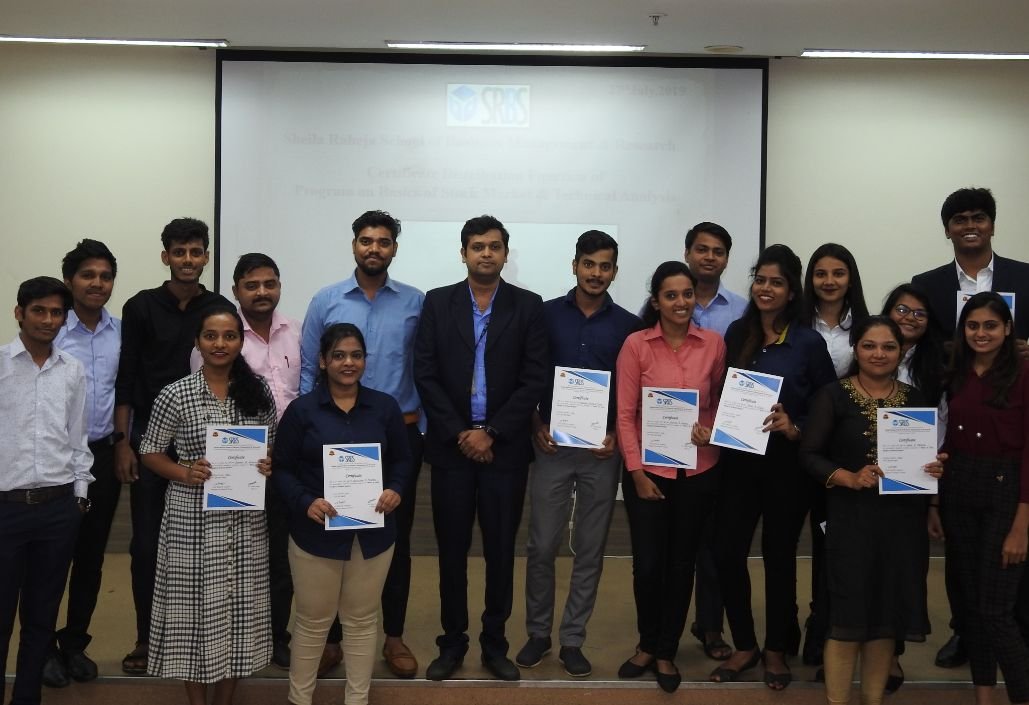
Such institutions ensure that they make the bridge. At Sheila Raheja School of Business Management and Research (SRBS) in Mumbai, the effort is always towards converting academic knowledge into professional skills through interaction with industry, master classes conducted by practitioners, internships, and guidance from the placements cell for real-world readiness for interviews. The objective is clear-cut – a graduate not merely holding a degree but equipped to deliver.
For students mapping out their path, that combination of strong fundamentals plus practical exposure is the one recruiters keep rewarding.
To learn more about management programmes designed with that outcome in mind, contact SRBS or visit srbs.edu.in.